by Ketut Sumerjana
INTRODUCTION
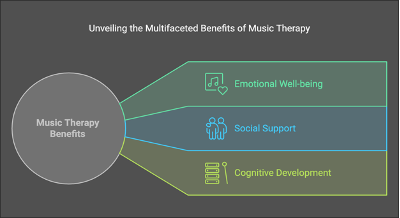
Music has intrigued scholars and researchers for centuries [1], [2], [3]. The importance of music in human experience is evident, spanning from ancient Greek and Chinese philosophies that acknowledged its significant role in character formation to modern scientific studies exploring its neurological and psychological impacts. This investigation examined the diverse influence of music, including its effects on cognitive development, emotional control, social connections, and therapeutic uses. We will consolidate data from various study approaches, recognize limits, and emphasize areas that require additional exploration.
MUSIC AND COGNITIVE DEVELOPMENT
A significant amount of evidence indicates a robust connection between music and cognitive development, especially in children and adolescents [6], [7]. Susan Hallam and Evangelos Himonides' publication, "The Power of Music: A Research Synthesis," thoroughly examines the effects of active music-making on cognitive, social, and personal growth [6], [7]. Their revised book extends previous research by including a broader age spectrum and examining the significance of music across a lifetime, particularly its implications for health and well-being [6]. The intricate nature of this connection warrants further investigation; however, the data indicate that musical instruction may improve certain cognitive abilities. This includes enhancements in memory, concentration, and problem-solving capabilities, as well as linguistic and mathematical proficiencies. Acquiring proficiency in playing an instrument specifically improves coordination and motor abilities [8]. The exact cognitive and neurological processes responsible for these benefits continue to be the subject of active research [4]. Further research is needed to fully understand the link between listening to music, certain cognitive functions, and the brain mechanisms that control these functions.
MUSIC AND EMOTIONAL REGULATION
People acknowledge the ability of music to elicit and influence emotions. Juliana Zapata-Cardona, M. C. Ceballos and Berardo de Jess Rodríguez emphasized music's capacity to affect physiological conditions and overall well-being, proposing a trans-specific impact on both humans and non-human animals [9]. Their study highlighted the potential of music as an environmental enrichment tool to enhance the well-being of caged animals [9]. The capacity of music to influence mood and emotional states has been well documented. Research conducted by Somani and Somani on the impact of music on mental health during the COVID-19 epidemic demonstrated the impact of music on relaxation, inspiration, mood, and emotional expression [10]. Nonetheless, they observed that the effect of music is dependent on the listener's selection, as melancholic music may exacerbate bad feelings [10]. This highlights the importance of personal preferences and the need for customized musical interventions in therapeutic settings. Katrina Skewes McFerran and Suvi Saarikallio examined young people's opinions on the ability of music to enhance well-being [11]. Their results underscore the potency of positive beliefs, even within conflicting experiences with mental health issues [11]. This underscores the need for personal accountability when harnessing the power of music, especially in therapeutic contexts [11].
MUSIC AND SOCIAL CONNECTIONS
Music contributes significantly to social connections and cohesiveness. N. Wallin, B., Merkur, S., Brown, W. Freeman presented a neurobiological framework to explain how music helps people connect. They suggested that dancing is a way for the brain to connect with each other and build strong communities [12]. Their study used anthropological and psychological ideas to show how rhythmic activities caused by music might lead to altered states of consciousness and increased trust between people [12]. This viewpoint enhances studies on the influence of music on romantic relationships [13]. The mixed-methods research by Julia Vigl, Joshua S. Bamford, Abbigail Fleckenstein, and Suvi Saarikallio demonstrated music's role in fostering closeness and passion, especially throughout the attraction and development stages of partnerships [13]. In addition, research was conducted by R. Granot, Daniel H. Spitz, Boaz R. Cherki et al. examined the efficacy of music in preserving well-being during the COVID-19 pandemic [14]. Their results demonstrated music's efficacy in achieving many well-being objectives such as pleasure, emotional release, and self-connection, underscoring its function as a universal tool for managing stress and isolation [14].
MUSIC AND THERAPEUTIC APPLICATIONS
Many health and wellness settings acknowledge the therapeutic power of music. Shantala Hegde's research emphasizes the underutilized potential of Indian classical music in music therapy for mental health, highlighting the many cultural manifestations of music's therapeutic efficacy. Sandra L. Siedliecki and Marion Good examined the impact of music on pain, despair, and disability, contrasting researcher-supplied music with participant-selected music [16]. Their results showed that music may help with pain relief and make people feel more powerful, which supports its potential as an extra treatment [16]. A review by Thakare and Agrawal on music therapy in neurological practice illustrates the impact of music on many physiological parameters, such as pain regulation, exercise performance, and autonomic functioning [17]. Bedanto Bhattacharjee's research underscores music's significance in tackling severe mental health and drug use problems [18], while G. Basile's study illustrates music's capacity to mitigate stress, enhance mood, and activate brain function in the recovery from traumatic injuries [19]. Junrui Huang and Xiaoqing Li's analysis examines the extensive impacts and applications of music therapy on psychological well-being [20], while Alfredo Raglio underscores the significance of the therapist-patient interaction in music therapy [21]. These studies jointly demonstrated the many uses of music therapy and its capacity to enhance physical and mental health.
MUSIC AND PUBLIC HEALTH
The impact of music encompasses public health programs designed to prevent and manage infectious illnesses [22]. Julio A. Benavides, Cristina Caparrs, Ramiro Mon da Silva, and associates emphasize the use of music in health campaigns to advocate practices that mitigate emerging infectious diseases (EIDs) [22]. Their research presented instances of effective interventions, such as the use of hip hop to combat AIDS and Brazilian funk to advocate for the COVID-19 vaccine [22]. They underscore the need for integrated information on music-based therapies and efficient assessment systems [22]. This demonstrates the capacity of music as an influential instrument for community involvement and behavioral modification in public health contexts.
MUSIC AND CULTURE
Cultural environment profoundly influences the perception and interpretation of music. Oluwafemi conducted this study. Daniel Adebisi, Addah Temple Tamuno-opubo, Yusuf Temitope Abeeb, and his associates examined the influence of music and activism on mental health discourse in Nigeria [25]. Their findings showed that music can effectively raise awareness and facilitate emotional expression, but has a limited impact on policy change [25]. This underscores the interaction among music, culture, and social transformation. The study by Yihe Jiang and Zheng examined how different types of music (Chinese pentatonic scales vs. Western major/minor modes) affect our bodies and emotions [24]. Their study demonstrated that various modal forms provoke distinct degrees of emotional arousal and that musical expertise and cultural background affect emotional experiences [24]. Paula Conlon's research on the Indigenous southern plains flute tradition examines the cultural importance of "good music" and its relationship to power, community, and moral integrity [26]. These examples exemplify the many cultural manifestations and interpretations of music and its influence.
THE NEUROLOGICAL FOUNDATION OF MUSIC
The neural foundations of music influence are a topic of continuous investigation [5], [27], [28]. Research by Nina Kraus in "Of Sound Mind" shows the complexity of the connection between hearing and brain function. It focuses on how sound perception is linked to thoughts, emotions, and other senses [5]. The review by Muriel Tahtouh Zaatar, Kenda Alhakim, Mohammad Enayeh, and Ribal Tamer examines the connection between music and the brain, addressing topics from neural decoding to therapeutic uses [27]. They emphasize the activation of many brain networks by music and the promise for music-based therapies in several areas [27]. Marc Leman's theoretical approach in "The Expressive Moment" emphasizes the connection between humans and sound as the origin of musical meaning, reinterpreting assumptions about music's ontology and communication [28]. These investigations enhance the comprehension of the intricate neurological processes that underlie the significant impact of music on human experience.
CONSTRAINTS AND PROSPECTIVE PATHS
Although the data strongly indicate the considerable impact of music on several areas, there are some limitations and opportunities for further investigation. Numerous investigations, especially those centered on therapeutic applications, require larger sample numbers and more stringent methodological techniques [16], [22]. Moreover, the absence of established metrics for evaluating the influence of music across many groups and circumstances poses a significant issue [29]. In the future, researchers need to focus on finding consistent ways to measure things, looking into how people from different cultures hear and react to music, and determining how music participation affects long-term cognitive, emotional, and social development. A comprehensive understanding of the neurological processes that govern the effects of music is essential for creating successful music-based therapies in many applications. Moreover, more research needs to be conducted to see how well different types and styles of music work in different educational and therapeutic settings [30]. The exploration of the effect of music is a dynamic and developing discipline, and ongoing research will certainly provide more insights into its significant impact on human experience.
CONCLUSION
The influence of music is a complex phenomenon that is intricately connected to human intellect, emotion, social interaction, and well-being. Music has a profound impact on cognitive development, emotional control, therapeutic use, and cultural value in human existence. This study provides much information about how music can affect people, but more research is needed to fully understand the complicated processes that control these effects and to develop music-based solutions that work in many situations. The ongoing investigation of the influence of music is expected to provide significant insights into the human condition and to guide novel strategies for improving health, education, and social cohesion. Research has consistently indicated that the influence of music transcends subjective perception and represents a fundamental element of human biology and culture. A comprehensive literature review suggests that a deep understanding of this force can reveal its potential for positive changes in various aspects of human life.
Music has intrigued scholars and researchers for centuries [1], [2], [3]. The importance of music in human experience is evident, spanning from ancient Greek and Chinese philosophies that acknowledged its significant role in character formation to modern scientific studies exploring its neurological and psychological impacts. This investigation examined the diverse influence of music, including its effects on cognitive development, emotional control, social connections, and therapeutic uses. We will consolidate data from various study approaches, recognize limits, and emphasize areas that require additional exploration.
MUSIC AND COGNITIVE DEVELOPMENT
A significant amount of evidence indicates a robust connection between music and cognitive development, especially in children and adolescents [6], [7]. Susan Hallam and Evangelos Himonides' publication, "The Power of Music: A Research Synthesis," thoroughly examines the effects of active music-making on cognitive, social, and personal growth [6], [7]. Their revised book extends previous research by including a broader age spectrum and examining the significance of music across a lifetime, particularly its implications for health and well-being [6]. The intricate nature of this connection warrants further investigation; however, the data indicate that musical instruction may improve certain cognitive abilities. This includes enhancements in memory, concentration, and problem-solving capabilities, as well as linguistic and mathematical proficiencies. Acquiring proficiency in playing an instrument specifically improves coordination and motor abilities [8]. The exact cognitive and neurological processes responsible for these benefits continue to be the subject of active research [4]. Further research is needed to fully understand the link between listening to music, certain cognitive functions, and the brain mechanisms that control these functions.
MUSIC AND EMOTIONAL REGULATION
People acknowledge the ability of music to elicit and influence emotions. Juliana Zapata-Cardona, M. C. Ceballos and Berardo de Jess Rodríguez emphasized music's capacity to affect physiological conditions and overall well-being, proposing a trans-specific impact on both humans and non-human animals [9]. Their study highlighted the potential of music as an environmental enrichment tool to enhance the well-being of caged animals [9]. The capacity of music to influence mood and emotional states has been well documented. Research conducted by Somani and Somani on the impact of music on mental health during the COVID-19 epidemic demonstrated the impact of music on relaxation, inspiration, mood, and emotional expression [10]. Nonetheless, they observed that the effect of music is dependent on the listener's selection, as melancholic music may exacerbate bad feelings [10]. This highlights the importance of personal preferences and the need for customized musical interventions in therapeutic settings. Katrina Skewes McFerran and Suvi Saarikallio examined young people's opinions on the ability of music to enhance well-being [11]. Their results underscore the potency of positive beliefs, even within conflicting experiences with mental health issues [11]. This underscores the need for personal accountability when harnessing the power of music, especially in therapeutic contexts [11].
MUSIC AND SOCIAL CONNECTIONS
Music contributes significantly to social connections and cohesiveness. N. Wallin, B., Merkur, S., Brown, W. Freeman presented a neurobiological framework to explain how music helps people connect. They suggested that dancing is a way for the brain to connect with each other and build strong communities [12]. Their study used anthropological and psychological ideas to show how rhythmic activities caused by music might lead to altered states of consciousness and increased trust between people [12]. This viewpoint enhances studies on the influence of music on romantic relationships [13]. The mixed-methods research by Julia Vigl, Joshua S. Bamford, Abbigail Fleckenstein, and Suvi Saarikallio demonstrated music's role in fostering closeness and passion, especially throughout the attraction and development stages of partnerships [13]. In addition, research was conducted by R. Granot, Daniel H. Spitz, Boaz R. Cherki et al. examined the efficacy of music in preserving well-being during the COVID-19 pandemic [14]. Their results demonstrated music's efficacy in achieving many well-being objectives such as pleasure, emotional release, and self-connection, underscoring its function as a universal tool for managing stress and isolation [14].
MUSIC AND THERAPEUTIC APPLICATIONS
Many health and wellness settings acknowledge the therapeutic power of music. Shantala Hegde's research emphasizes the underutilized potential of Indian classical music in music therapy for mental health, highlighting the many cultural manifestations of music's therapeutic efficacy. Sandra L. Siedliecki and Marion Good examined the impact of music on pain, despair, and disability, contrasting researcher-supplied music with participant-selected music [16]. Their results showed that music may help with pain relief and make people feel more powerful, which supports its potential as an extra treatment [16]. A review by Thakare and Agrawal on music therapy in neurological practice illustrates the impact of music on many physiological parameters, such as pain regulation, exercise performance, and autonomic functioning [17]. Bedanto Bhattacharjee's research underscores music's significance in tackling severe mental health and drug use problems [18], while G. Basile's study illustrates music's capacity to mitigate stress, enhance mood, and activate brain function in the recovery from traumatic injuries [19]. Junrui Huang and Xiaoqing Li's analysis examines the extensive impacts and applications of music therapy on psychological well-being [20], while Alfredo Raglio underscores the significance of the therapist-patient interaction in music therapy [21]. These studies jointly demonstrated the many uses of music therapy and its capacity to enhance physical and mental health.
MUSIC AND PUBLIC HEALTH
The impact of music encompasses public health programs designed to prevent and manage infectious illnesses [22]. Julio A. Benavides, Cristina Caparrs, Ramiro Mon da Silva, and associates emphasize the use of music in health campaigns to advocate practices that mitigate emerging infectious diseases (EIDs) [22]. Their research presented instances of effective interventions, such as the use of hip hop to combat AIDS and Brazilian funk to advocate for the COVID-19 vaccine [22]. They underscore the need for integrated information on music-based therapies and efficient assessment systems [22]. This demonstrates the capacity of music as an influential instrument for community involvement and behavioral modification in public health contexts.
MUSIC AND CULTURE
Cultural environment profoundly influences the perception and interpretation of music. Oluwafemi conducted this study. Daniel Adebisi, Addah Temple Tamuno-opubo, Yusuf Temitope Abeeb, and his associates examined the influence of music and activism on mental health discourse in Nigeria [25]. Their findings showed that music can effectively raise awareness and facilitate emotional expression, but has a limited impact on policy change [25]. This underscores the interaction among music, culture, and social transformation. The study by Yihe Jiang and Zheng examined how different types of music (Chinese pentatonic scales vs. Western major/minor modes) affect our bodies and emotions [24]. Their study demonstrated that various modal forms provoke distinct degrees of emotional arousal and that musical expertise and cultural background affect emotional experiences [24]. Paula Conlon's research on the Indigenous southern plains flute tradition examines the cultural importance of "good music" and its relationship to power, community, and moral integrity [26]. These examples exemplify the many cultural manifestations and interpretations of music and its influence.
THE NEUROLOGICAL FOUNDATION OF MUSIC
The neural foundations of music influence are a topic of continuous investigation [5], [27], [28]. Research by Nina Kraus in "Of Sound Mind" shows the complexity of the connection between hearing and brain function. It focuses on how sound perception is linked to thoughts, emotions, and other senses [5]. The review by Muriel Tahtouh Zaatar, Kenda Alhakim, Mohammad Enayeh, and Ribal Tamer examines the connection between music and the brain, addressing topics from neural decoding to therapeutic uses [27]. They emphasize the activation of many brain networks by music and the promise for music-based therapies in several areas [27]. Marc Leman's theoretical approach in "The Expressive Moment" emphasizes the connection between humans and sound as the origin of musical meaning, reinterpreting assumptions about music's ontology and communication [28]. These investigations enhance the comprehension of the intricate neurological processes that underlie the significant impact of music on human experience.
CONSTRAINTS AND PROSPECTIVE PATHS
Although the data strongly indicate the considerable impact of music on several areas, there are some limitations and opportunities for further investigation. Numerous investigations, especially those centered on therapeutic applications, require larger sample numbers and more stringent methodological techniques [16], [22]. Moreover, the absence of established metrics for evaluating the influence of music across many groups and circumstances poses a significant issue [29]. In the future, researchers need to focus on finding consistent ways to measure things, looking into how people from different cultures hear and react to music, and determining how music participation affects long-term cognitive, emotional, and social development. A comprehensive understanding of the neurological processes that govern the effects of music is essential for creating successful music-based therapies in many applications. Moreover, more research needs to be conducted to see how well different types and styles of music work in different educational and therapeutic settings [30]. The exploration of the effect of music is a dynamic and developing discipline, and ongoing research will certainly provide more insights into its significant impact on human experience.
CONCLUSION
The influence of music is a complex phenomenon that is intricately connected to human intellect, emotion, social interaction, and well-being. Music has a profound impact on cognitive development, emotional control, therapeutic use, and cultural value in human existence. This study provides much information about how music can affect people, but more research is needed to fully understand the complicated processes that control these effects and to develop music-based solutions that work in many situations. The ongoing investigation of the influence of music is expected to provide significant insights into the human condition and to guide novel strategies for improving health, education, and social cohesion. Research has consistently indicated that the influence of music transcends subjective perception and represents a fundamental element of human biology and culture. A comprehensive literature review suggests that a deep understanding of this force can reveal its potential for positive changes in various aspects of human life.
REFERENCES
1. Botstein L. On the Power of Music. None. 2006. https://doi.org/10.1093/MUSQTL/GDI015
2. Wang Y. The Ethical Power of Music: Ancient Greek and Chinese Thoughts. University of Illinois Press.
2004. https://doi.org/10.1353/jae.2004.0009
3. Granot R, Shair N. The Origin and Power of Music According to the 11th-Century Islamic Philosopher Ibn Sn. Journal of the Royal Asiatic Society. 2019. https://doi.org/10.1017/S1356186319000178
4. Soto D. Interplay between music, emotion and cognitive function in health and disease. None. 2009. https://doi.org/10.4161/cib.2.6.9656
5. Kraus N. Of Sound Mind. The MIT Press. 2021. https://doi.org/10.7551/mitpress/13606.001.0001
6. Hallam S, Himonides E. The Power of Music: an exploration of the evidence [PREPRINT]. None. 2021. https://doi.org/10.31219/osf.io/7tzjr
7. Hallam S, Himonides E. 8. Intellectual Development. None. 2022. https://doi.org/10.11647/obp.0292.08
8. Fong C. MUSIC AND THE EFFECTS ON THE BRAIN AND EMOTIONS. International Education and Research Journal. 2024. https://doi.org/10.21276/ierj24068910282473
9. Zapata-Cardona J, Ceballos MC, Rodrguez BDJ. Music and Emotions in Non-Human Animals from Biological and Comparative Perspectives. Animals. 2024. https://doi.org/10.3390/ani14101491
10. Somani P, Somani N. THE EFFECTS OF MUSIC ON MENTAL HEALTH AND COVID-19. None. 2023. https://doi.org/10.57259/grj6348
11. McFerran KS, Saarikallio S. Depending on music to feel better: Being conscious of responsibility when appropriating the power of music. Elsevier BV. 2013. https://doi.org/10.1016/j.aip.2013.11.007
12. Wallin N, Merkur B, Brown S, Freeman W. A neurobiological role of music in social bonding. None. NaN. https://doi.org/10.7551/mitpress/5190.003.0028
13. Vigl J, Bamford JS, Fleckenstein A, Saarikallio S. Music across the love-span: a mixed methods study into the use of music in romantic relationships. Open Research Europe. 2024. https://doi.org/10.12688/openreseurope.19016.1
14. Granot R, Spitz DH, Cherki BR, Loui P, Timmers R, Schaefer RS, et al. Help! I Need Somebody: Music as a Global Resource for Obtaining Wellbeing Goals in Times of Crisis. Frontiers in Psychology. 2021. https://doi.org/10.3389/fpsyg.2021.648013
15. Hegde S. Music therapy for mental disorder and mental health: the untapped potential of Indian classical music. Cambridge University Press. 2017. https://doi.org/10.1192/s2056474000001732
16. Siedliecki SL, Good M. Effect of music on power, pain, depression and disability. Wiley. 2006. https://doi.org/10.1111/j.1365-2648.2006.03860.x
17. Thakare A, Agrawa A. Role of music therapy in neurological practice. Romanian Journal of Neurology. 2022. https://doi.org/10.37897/rjn.2022.2.8
18. Bhattacharjee B. The role of music in mental health treatment. None. 2024. https://doi.org/10.70121/001c.124789
19. Basile G. Beneficial effects of music in the healing process of traumatic injuries: perceptual control of suffering and possible abatement of disability conditions.. Clinica Terapeutica. NaN. https://doi.org/10.7417/CT.2023.5021
20. Huang J, Li X. Effects and Applications of Music Therapy on Psychological Health: A Review. Advances in Social Science, Education and Humanities Research. NaN. https://doi.org/10.2991/assehr.k.220110.186
21. Raglio A. When music becomes music therapy. Wiley. 2011. https://doi.org/10.1111/j.1440-1819.2011.02273.x
22. Benavides JA, Caparrs C, Silva RMD, Lembo T, Dia PT, Hampson K, et al. The Power of Music to Prevent and Control Emerging Infectious Diseases. Frontiers Media. 2021. https://doi.org/10.3389/fmed.2021.756152
23. Brunt S, CALLANDER MM, Diaz-Gasca S, Gadir T, Rogers I, Strong C. Music as Magic. Queensland University of Technology. 2023. https://doi.org/10.5204/mcj.2998
24. Jiang Y, Zheng M. The inductive effect of musical mode types on emotions and physiological responses: Chinese pentatonic scales versus Western major/minor modes. Frontiers in Psychology. 2024. https://doi.org/10.3389/fpsyg.2024.1414014
25. Adebisi OD, Tamuno-opubo AT, Abeeb YT, Josephine AA, Olugbenro AC. Harmonising minds and culture: Exploring the role of music in mental health awareness through activism in Nigeria. International Journal of Health Sciences. 2024. https://doi.org/10.53730/ijhs.v8n3.15428
26. Conlon P. Power and good music: The Indigenous southern plains flute tradition. Journal of the Acoustical Society of America. 2024. https://doi.org/10.1121/10.0026979
27. Zaatar MT, Alhakim K, Enayeh M, Tamer R. The transformative power of music: Insights into neuroplasticity, health, and disease. Elsevier BV. 2023. https://doi.org/10.1016/j.bbih.2023.100716
28. Goldman A. Book Review: Marc Leman, The expressive moment: How interaction (with music) shapes human empowerment. None. 2017. https://doi.org/10.1177/1029864917717146
29. Gustafsson C. Sonic branding: A consumer-oriented literature review. Palgrave Macmillan. 2015. https://doi.org/10.1057/bm.2015.5
30. Tripathy M, Chaudhari M. The Impact of Rock Music on Indian Young Adults: A Qualitative Study on Emotions and Moods. None. 2021. https://doi.org/10.47059/revistageintec.v11i4.2566
31. Burton S. The Eighth Wonder: Music and Its Effects on People. None. NaN. https://doi.org/None
32. Thorgersen K. Music education as manipulation a proposal for playing. None. 2020. https://doi.org/10.23865/nrme.v1.2562
33. Karageorghis CI. Tapping the Power of Music in Sport and Exercise. British Computer Society. 2012. https://doi.org/10.14236/ewic/eva2012.3
34. Prior HM. How Can Music Help Us to Address the Climate Crisis?. SAGE Publishing. 2022. https://doi.org/10.1177/20592043221075725
35. Wu H, Wang D, Zhou L. Tunes that move us: the impact of music-induced emotions on prosocial decision-making. Frontiers in Psychology. 2025. https://doi.org/10.3389/fpsyg.2024.1453808
36. Yazar LU. The effects of music on brain development. Journal of Human Sciences. 2024. https://doi.org/10.14687/jhs.v21i3.6483
37. Cates B. On the Power of Music: Using ''Cosmos'' and ''Anthropos'' to Articulate a Holistic Approach to Discussing the Power of Music. Department of Music and Worship. 2013. https://doi.org/10.15385/jmo.2013.4.1.3
38. Yetti E. Moving to The Beats: The Effect of Dance Education on Early Self-Regulation. None. 2021. https://doi.org/10.21009/jpud.152.11
39. Ansani A, Marini M, Poggi I, Mallia L. Recognition memory in movie scenes: the soundtrack induces mood-coherent bias, but not through mood induction. Journal of Cognitive Psychology. 2022. https://doi.org/10.1080/20445911.2022.2116448
40. Pokharel R. Impact of Music on Mental Health. MedS Alliance Journal of Medicine and Medical Sciences. 2021. https://doi.org/10.3126/mjmms.v1i1.42959
41. Panjaitan AP. Kekuatan Musik dalam Pendidikan Karakter Manusia. None. 2020. https://doi.org/10.26593/mel.v35i2.4040.174-194
42. Duman N. MZIN DNTRC GC: BL, DAVRANI VE DUYGULAR ZERNDEK ETKSN KEFETMEK. None. 2023. https://doi.org/10.47525/ulasbid.1383017
43. . 11. Beethoven''s Instrumental Music. University of Toronto Press. 1975. https://doi.org/10.3138/9781487583309-012
44. Lippi D. Music and medicine. Dove Medical Press. 2010. https://doi.org/10.2147/jmdh.s11378
45. Praise SP, Meenakshi K. The Effect of Music on Human Brain in Developing Learning Skills and Physical Health. Mediterranean Center of Social and Educational Research. 2015. https://doi.org/10.5901/mjss.2015.v6n2s1p244
46. Rentfrow P. The Role of Music in Everyday Life: Current Directions in the Social Psychology of Music. None. 2012. https://doi.org/10.1111/J.1751-9004.2012.00434.X
47. Hau KT, Tee V, Kuan G. Effects of Electronic Dance Music on Academic Performance among Medical Students: A Narrative Review. Education in Medicine Journal. 2024. https://doi.org/10.21315/eimj2024.16.1.2
48. Hau KT, Tee V, Kuan G. Music on Academic Performance Among. None. NaN. https://doi.org/None
49. Butler K. Myth, Science, and the Power of Music in the Early Decades of the Royal Society. Journal of the History of Ideas. 2015. https://doi.org/10.1353/JHI.2015.0006
50. Perlovsky L. Cognitive Function of Music and Meaning-Making. None. 2016. https://doi.org/10.4172/2090-2719.S1-004